How Much Does a SaaS Website Cost in 2026? Real Prices, Tiers and Hidden Costs
A SaaS website costs anywhere from $2,000 to $150,000+. Here's what decides where you land: who builds it, how many pages, which platform, and the costs nobody puts in the quote.

- Updated
- Read
- 8 min
How much does a SaaS website cost? Most seed and Series A SaaS companies spend $9,000 to $35,000 on a marketing website in 2026, and it takes four to eight weeks to design and build. A template or freelancer gets you live for less; mid-size and enterprise agencies charge $30,000 to well over $80,000.
If you've asked three agencies for a quote and got back $6,000, $24,000 and $70,000 for what sounds like the same website, you're not alone. Founders forward us these quotes every week. The numbers aren't random. They price different amounts of thinking, different people doing the work, and very different definitions of "done".
This guide breaks down what a SaaS website really costs in 2026, what you get at each price, and how to spend less without looking like you did. We publish our own prices too, so you can check our maths against everyone else's.
TL;DR
30-second read
- Template + DIY$0–$2k
- Freelancer$2k–$10k
- Boutique studioMost seed teams$9k–$35k
- Mid-size agency$30k–$80k
- Enterprise agency$80k–$150k+
- 01
Quotes vary because they come from four different kinds of team: freelancers at $2k–$10k, boutique studios at $9k–$35k, mid-size agencies at $30k–$80k and enterprise agencies from $80k.
- 02
Most seed and Series A SaaS teams land at $9,000 to $35,000 for a site that explains the product and converts.
- 03
Cost scales with unique page templates, custom product visuals and the platform, not the raw page count.
- 04
Framer and Webflow are cheapest to build; custom Next.js costs 30–60% more but removes every platform limit.
- 05
Budget for the hidden costs: copy, subscriptions, SEO redirects, new pages after launch and your own team's time.
Why SaaS website quotes range from $2,000 to $150,000
A SaaS website isn't a brochure. Its job is to make a complicated product obvious in the few seconds a visitor gives you, then turn that understanding into a demo, a signup or a sale. How much work goes into that "obvious" is what you're paying for.
- Messaging and copy. The cheapest quotes assume you'll hand over the words. Good SaaS copy is often half the project, because it's where positioning gets decided.
- Page templates, not pages. A blog post template designed once can power 200 posts. Cost scales with the number of unique layouts, not the page count.
- Product storytelling. Static screenshots are cheap. Custom product animation, interactive demos or 3D add real design and engineering time.
- Platform. Framer and Webflow builds are faster to ship. Custom Next.js costs more upfront but gives you speed, flexibility and no platform limits.
- Seniority. A senior designer who has shipped 30 SaaS sites works faster and makes fewer wrong turns than a junior team, and charges accordingly.
SaaS website cost by who builds it
The biggest single factor in your price is the kind of team you hire. Here are typical 2026 ranges for a SaaS marketing site with a homepage, product pages, pricing, about and a blog.
| Who builds it | Typical cost | Timeline | Best for |
|---|---|---|---|
| Template + DIY | $0–$2,000 | 1–2 weeks | Pre-seed, testing an idea |
| Freelancer | $2,000–$10,000 | 3–6 weeks | Simple sites, tight budgets |
| Boutique design studioOur pick | $9,000–$35,000 | 4–12 weeks | Seed to Series A |
| Mid-size agency | $30,000–$80,000 | 8–16 weeks | Series A to B, bigger sites |
| Enterprise brand agency | $80,000–$250,000+ | 4–9 months | Public companies, rebrands |
Templates and freelancers: $0–$10,000
A good Framer or Webflow template plus a weekend gets you a credible site. A freelancer can customise it or design from scratch. The trade-off is that you'll usually write the copy yourself, and one person rarely covers strategy, design, motion and development equally well. Fine for validating demand; risky when you're raising or selling to enterprise buyers.
Boutique studios: $9,000–$35,000
This is where most venture-backed SaaS teams land. You get a small senior team that handles messaging, design and build together, usually on Framer, Webflow or Next.js. The best studios specialise in SaaS or AI, so they've already solved the "how do we explain this" problem for products like yours.
Mid-size and enterprise agencies: $30,000 and up
Larger agencies bring account managers, research phases, bigger teams and more process. That's worth paying for when you need many stakeholders aligned, dozens of templates or global launches. For a 10-person startup, a lot of that budget goes to overhead you won't use.
What our SaaS website projects cost
Most agencies hide their prices behind a discovery call. We don't. Every Elysium price is built from one number, a $1,200 senior day rate, and our website tiers look like this:
| Tier | Price | Timeline | What it covers |
|---|---|---|---|
| LandingOur pick | from $6,000 | 3–4 weeks | A single-page site: messaging and copy, responsive design, Figma file, SEO and AEO setup, analytics. Development adds $3,000 |
| Flagship | from $30,000 | 10–12 weeks | No page limit: built on Next.js, Webflow, Framer or WordPress, interactive product hero, CMS, integrations connected, performance engineering, design system |
What the money buys
SaaS, AI and fintech sites we designed and built. Open any of them to see the scope behind the price.
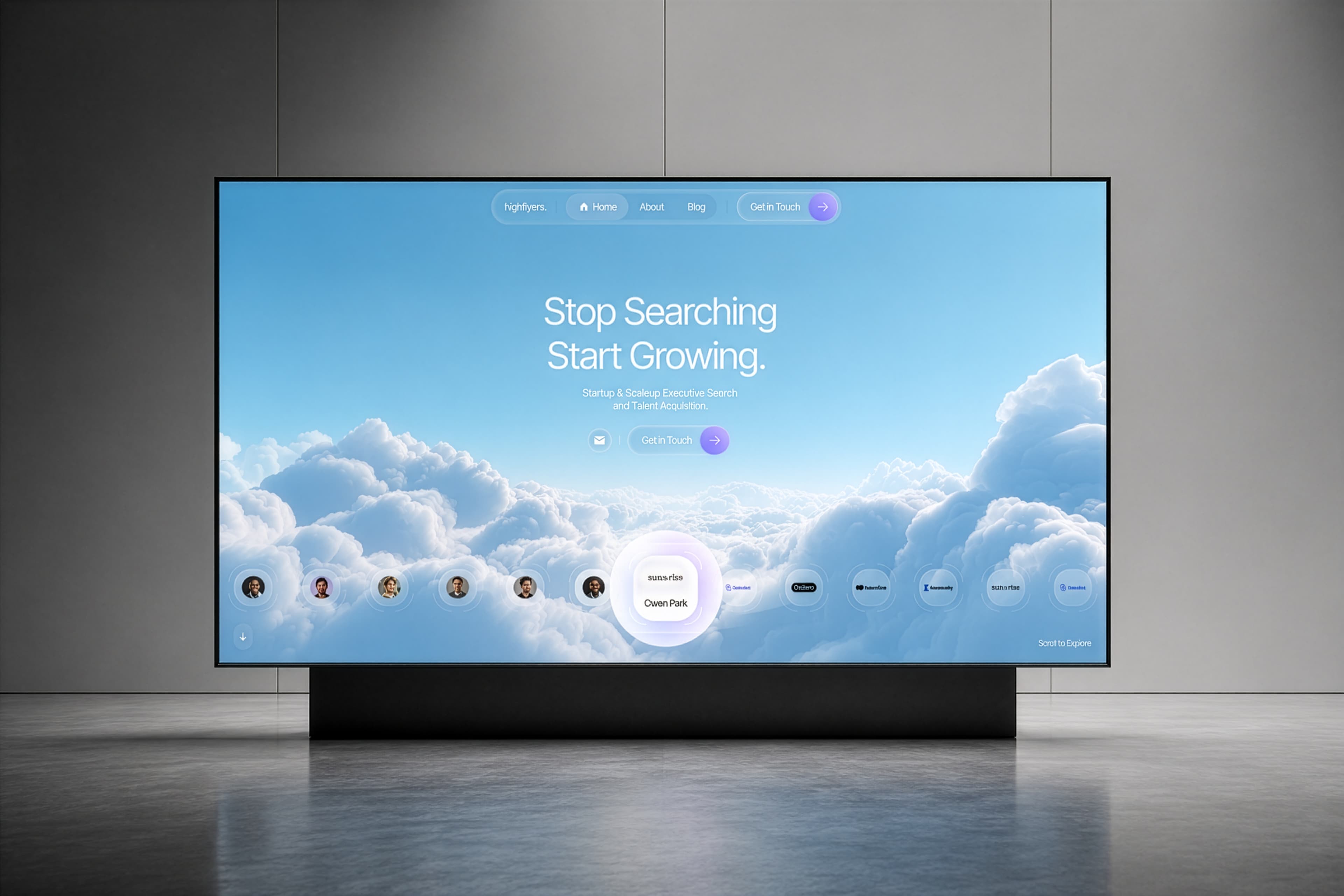
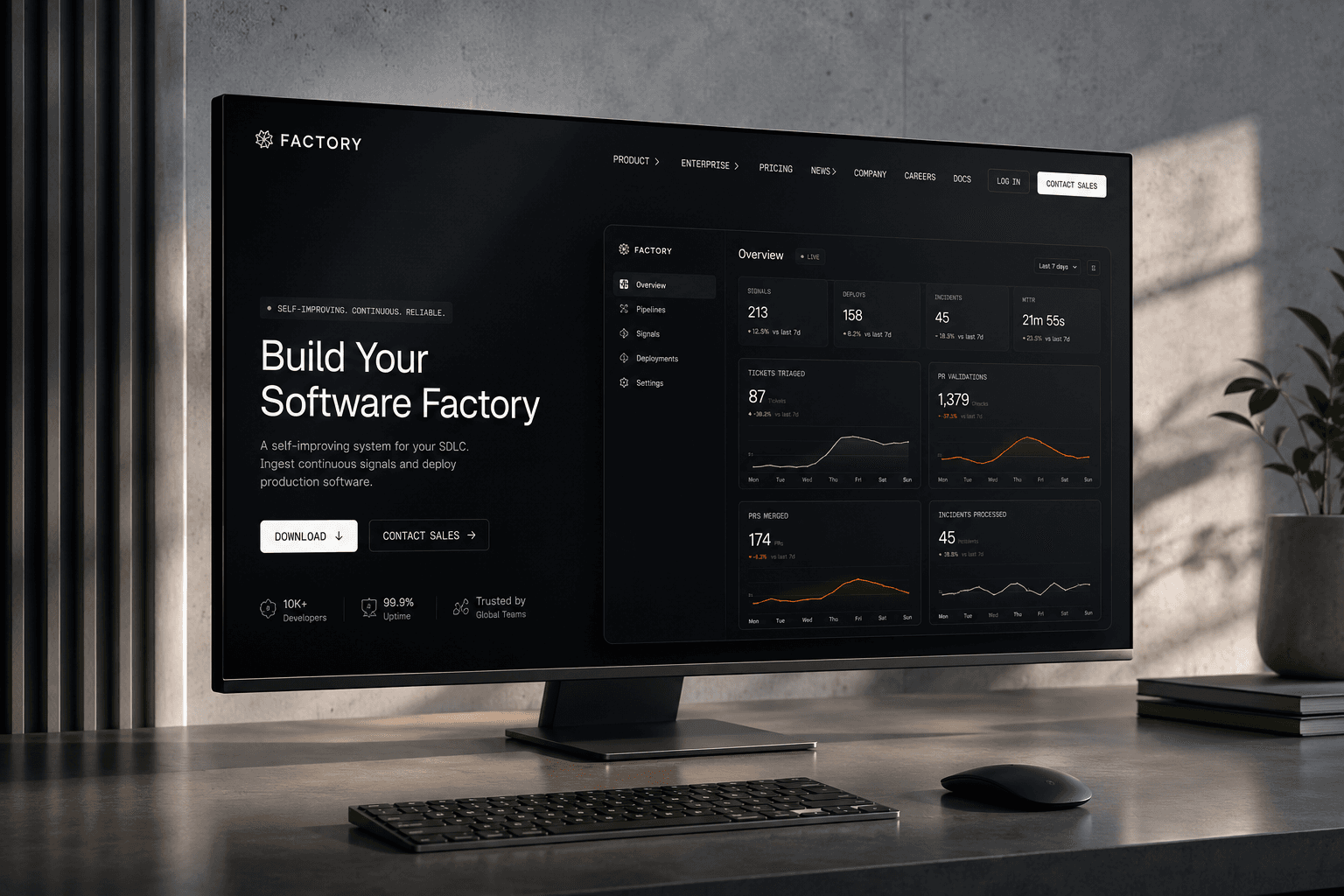
Every tier includes the copy, because a beautiful site with vague words still doesn't convert. See the full breakdown, add-ons and bundles on our pricing page.
What's included in a SaaS website project?
When you compare quotes, compare scope line by line. A complete SaaS website project in 2026 should cover:
- Positioning and messaging: who it's for, the problem, and why you, written before anything is designed.
- Copywriting for every page, including headlines, product explanations and calls to action.
- Information architecture: the sitemap and the order a buyer needs to hear things in.
- Visual design for desktop and mobile, built on a reusable component system.
- Product visuals: UI shots, animation or an interactive demo that shows the product working.
- Development on your chosen platform, with a CMS your team can edit without a developer.
- Technical SEO and AEO: metadata, schema, sitemaps, redirects and structure that AI search engines can read.
- Performance: a speed budget (we aim for 90+ on Lighthouse), image optimisation and Core Web Vitals.
- Analytics and tracking wired up before launch, not after.
- Launch support and a short window of post-launch fixes.
If a quote is missing copy, SEO or analytics, it isn't cheaper. You'll pay for those later, usually in a hurry.
Framer vs Webflow vs Next.js: which costs less?
Your platform choice changes both the build price and what you pay to run and grow the site.
| Framer | Webflow | Next.js (custom) | |
|---|---|---|---|
| Build cost | Lowest | Low to medium | Highest (often 30–60% more) |
| Time to launch | Fastest | Fast | Slower |
| Marketing team can edit | Yes, very easily | Yes | Yes, with a headless CMS |
| Interactive demos, WebGL | Limited | Limited | No limits |
| Ongoing platform fees | Monthly plan | Monthly plan + CMS seats | Hosting, often small at first |
| Best for | Seed teams moving fast | Content-heavy sites | Product-led stories, scale |
Our rule of thumb: start on Framer when speed matters more than anything, and move to Next.js when the site needs to do things a page builder can't, like a live product demo. Migrating later is possible (we quote it from $10,000) but it's cheaper to choose right the first time.
How much should a SaaS startup spend on its website?
Spend in proportion to what the website has to do at your stage. Here's what we'd recommend to a friend:
| Stage | Sensible budget | What to prioritise |
|---|---|---|
| Pre-seed | $0–$10,000 | A clear one-page story, a waitlist or demo form, fast to change |
| SeedOur pick | $9,000–$25,000 | Messaging, a credible brand, product visuals that explain the product |
| Series A | $18,000–$60,000 | Pages per persona and use case, SEO content engine, enterprise trust signals |
| Series B and later | $60,000+ or a monthly retainer | Experimentation, localisation, a site design system, conversion work |
If you're raising, the website is part of the pitch. Investors look at it before the meeting, and enterprise buyers look at it before they reply. That's why we bundle brand and site in a Foundation Suite for teams going into a round.
The hidden costs of a SaaS website
These are the line items that turn a $15,000 website into a $25,000 one. Ask about each before you sign.
- Copywriting, if it's not in the quote. Outsourced SaaS copy often adds $2,000–$8,000.
- Platform and tool subscriptions: website plan, CMS seats, forms, analytics and scheduling tools. Small each month, but they add up over a year.
- Custom illustration, 3D or product animation, usually quoted separately from the site.
- SEO and AEO setup: schema, redirects from your old site and AI search visibility. Skip the redirects and you can lose rankings on launch day.
- New pages after launch. Every new landing page, case study or integration page costs design and build time. We charge $1,500 a page.
- Your team's time. Reviews, feedback rounds and approvals. A clear owner on your side saves weeks.
- A rebuild in 18 months if the first site can't grow with you. This is the most expensive hidden cost of all.
One-off website project or monthly retainer?
A one-off project makes sense when you need a defined site launched by a date. A retainer makes sense once the website becomes a growth channel that needs new pages, experiments and product updates every month.
Do the maths against hiring. In the US, a senior product or web designer often costs well over $150,000 a year once you add benefits and recruiting, and that's one person with one skill set. Our Elysium 360 retainer starts at $8,000 a month for a senior design and development stream, with no hiring risk and the option to stop after three months.
Questions to ask a web design agency before you sign
- Who actually designs and builds my site, and how senior are they?
- Is copywriting included? Who writes the homepage headline?
- Which platform will you use, and can my team edit the site without you?
- What's fixed in the price and what could change it?
- How many revision rounds are included?
- How will you protect our existing SEO rankings during the switch?
- What does post-launch support look like, and what does it cost?
- Who owns the design files, code and accounts when we're done?
- Can I speak to two SaaS founders you've worked with?
For a full due-diligence list, read our guide on how to choose a UI/UX design agency.
How to lower your SaaS website cost without looking cheap
- Launch with five strong pages, not fifteen thin ones. Add use-case pages once you know which ones sell.
- Get your positioning straight first. Most expensive redesign loops happen because the story changes mid-project.
- Reuse your product UI as the hero visual instead of commissioning illustration for v1.
- Design templates, not pages, so your team can publish new pages without a designer.
- Ask about startup pricing. We take 10% off for YC and a16z speedrun teams, and our two-week Clarity Audit is fully credited to a project.
The bottom line
In 2026, a SaaS website that actually explains your product and converts will cost most startups between $9,000 and $35,000, with templates and freelancers below that and large agencies above it. The cheapest quote is rarely the cheapest website. Pay for clear messaging, a platform you can grow on and a team that's done it before, and you'll only build it once.

